Pet behaviour school
Leading on from our Basic Training features, we're graduating to the Pet Behaviour School with Battersea's Behaviour team.
Lesson One: Fireworks
 Battersea Dogs Home often receives reports of distressed and lost pets during the autumn months due to fireworks. In our first lesson in the pet behaviour school, Ali Taylor, Battersea's Head of Behaviour, addresses the most common problems and preventative measures pet owners can take during the
firework season.
As you get to know your dog or cat, you will notice changes in his or her behaviour in various situations. During the firework season, which can stretch from the end of October right into January, many pets suffer from adverse reactions to the unusual and sudden sights and sounds associated with fireworks.
- Commonly seen signs may include:
shaking and tremblingexcessive droolingbarking and howlingtrying to hidetrying to get either into or out of the house or gardentemporary loss of appetitetemporary loss of bladder or bowl control(Of course, if any of these symptoms become excessive or persist after the fireworks have stopped, you should seek veterinary advice as they may be related to a medical condition)
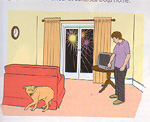
Unfortunately, it can be difficult to treat a fear if the event that causes it is infrequent or unpredictable. This is also the case with thunder. Dogs and cats have very good hearing and can be very sensitive to loud noises, even from afar. In panic or confusion, they can go to great lengths to escape such as digging under fences, jumping out of open windows or doors, and chewing through leads.
- What can I do to help my nervous pet?
Here are some tips on how to prevent unnecessary stress for your pet during fireworks:
keep all pets indoors during fireworkskeep your pet in a dark, quiet room, preferably a room in the house at the furthest point from the fireworksif your pet does become stressed, do not comfort him, as this will only reinforce his fear. Instead try and block out any noises. Turn on a radio or the television to distract or muffle any outside noises. It is also important for you to act as normal as possible so your animal does not pick up your anxietiesif your pet is extremely sensitive, consider consulting your veterinary surgeon for a mild sedative or tranquilliser to help keep your pet calm. There are also herbal remedies that are available that can assist your pet with this problem. Consult your vet on thesetry to walk your dog before the fireworks begin as some pets are too frightened to go outside to relieve themselves during the noise and this may lead to little accidents later in the eveningif you must go out with your pet, make sure dogs are exercised on the lead and cats are kept in a carrier at all times to avoid them charging off following a loud and sudden bangmake sure your pet is properly identified, just in case he does run off during all the fireworks commotion. Make sure he has a proper identification tag on his collar with your current contact details on. (cats should wear a break away or elastic collar just in case the collar gets caught on something and the cat needs to break free). It is also worth considering getting your pet microchipped (if he hasn't already got one), as a permanent form of ID that helps reunite lost pets with their ownerstry desensitising your pet - desensitisation requires sound effect tapes, audiotapes or videos impersonating the sounds of fireworks. This may not work for every pet, especially if the behaviour has been established over a period of years. If using this method, you will gradually need to play your tapes over a period of months, starting with the volume on very low in the background of your home. After a week or so you can then start to increase the volume, although this should be done gradually in order to avoid increased stress levels in your pet. It is also recommended that you do not comfort your pet if he shows signs of anxiety, as this will only reinforce the feelingif necessary, get a responsible friend or relative that lives in a more rural environment to take care of your pet for a while, but always remember to update your pets id tag with the relevant contact details if he's is staying away from home. Alternatively, you may want to book your pets into a rural boarding kennels to ensure complete safetyWhatever you decide to do - remember that your pet has no idea what fireworks are and may or may not react to them. Be gentle and try to avoid unnecessary stressful situations where possible.
- What if my pet goes missing?
If your pet does go missing, search the local area immediately, as he may be hiding nearby.
Contact your local dog warden or police station to record your pet's details, and call all the local rescue centres to see if your pet has been found and taken into their care. Advertise the loss of your pet by putting up posters in your area, local shops and veterinary surgeries.
If you live within the M25, contact the Lost Dogs and Cats Line at Battersea Dogs Home immediately, on 0905 477 8477. Calls are charged at 60p per minute.
Lesson Two - Christmas
 Christmas is a time for celebration, family gatherings, food, presents and lots of excitement. In some households Christmas can be quite chaotic - what with organising family reunions, the Christmas dinner, the tree, the presents, and the decorations whilst trying to keep the children happy and the in-laws as far apart as possible. However, in some households the pets are often forgotten about amongst all this mayhem which can lead to behavioural problems. Lesson Two helps you make Christmas the season of goodwill for everyone in your household, including your pets. Ali Taylor addresses the various problems that your pet may experience during the Christmas period.
The festive season is also a very exciting time for our pets what with all the food, people and presents around, however it can also prove to be traumatic. Like human beings, some animals will be highly excitable, others may be timid and shy and some may simply want to join in the Christmas fun. Whichever category your pet falls into, all dogs and cats should be supervised throughout the festivities in order to prevent any casualties.
- Common problems to be aware of over Christmas
Christmas trees - if you have a real Christmas tree you should be aware that the needles will fall from your tree over time. They are hard and sharp, and can easily get stuck in animal paws or throats. Keep animals away from them, or frequently clear up the fallen needles.Christmas tree decorations - cats may show a keen interest towards the baubles and decorations hanging from your Christmas tree, which could result in a nasty accident. Try to use unbreakable baubles, don't use anything too small, and make sure your tree is well anchored, so your cat's attentions can't pull the tree overflashing fairy lights- these can freak your pet out especially if he is close to them. Try using lights that don't flash on and offHanging chocolate decorations - it is advisable not to hang human chocolate from your Christmas tree, as this will be an added temptation for your pet. Human chocolate is bad for your pet - it contains theobromine which is dangerous when eaten in large quantitiesholly, mistletoe and yew are poisonous to pets and can be extremely dangerous - so make sure they are well out of reachloud noises - remember balloons, Christmas crackers, poppers and champagne bottles all go off with load bangs. Ensure your pet is kept away from these noises to prevent unnecessary panicwrapping paper - always remove wrapping paper (and toys) when not using to avoid your pet chewing or choking on themover indulgence - if you give your pet human leftovers, only give them a little to avoid diarrhoea. Avoid giving your pets bones that can splinter (i.e. chicken / turkey bones), as these can be dangerous if they get lodged in the throatvisitors - has your dog regularly met all the family members and friends that you might be inviting to your house during the Christmas period? If not, your pet may be a little shy, nervous or apprehensive when meeting people for the first time. Ensure your pet is supervised when they meet your guests for the first time, and that visitors understand the situationyoung children - if you have young members of the family visiting over Christmas, your dog or cat is likely to be more excited than usual. Ensure your pet is always supervised around young children especially when they are playing with new toys. Certain toys may be loud or electronically mobile which may excite or scare your petChristmas pressies for your pets - make sure your pet presents are dog or cat proof. Buy them from a reputable pet shop or veterinary clinic. Make sure you avoid giving your pet things that may make them act possessively - especially if children are around.
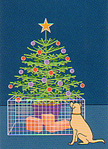
- Don't let these issues worry you too much, as it's easy to avoid most pet related Christmas disasters. As most problems arise from the Christmas tree itself, here are three easy steps to follow to ensure a pleasant, painless Christmas:
build a pen or fenced off area surrounding your Christmas tree to separate pet and treemove your Christmas tree to a room that your pet is not allowed in, or use a dog gate to limit your pet's access to the room, allowing your pet in the room only when supervisedput your pet in a separate room from the festive mayhem. Choose the furthest room away from the noise, and perhaps leave a radio or television on to block out any noises that may startle your pet. Give your pet something of comfort like his bed, scatter some treats, and leave your dog a nice marrowbone to keep him occupied or some toys to play with. For additional peace of mind, find out when your veterinary surgery is open over the holiday season, or the number of another vet that has an emergency service available. But most of all - don't forget about your furry friend over the festive season. If you know that your dog or cat may behave in a particular way - think about ways to avoid incidences and accidents. He can enjoy Christmas as much as you!
Lesson Three - New pet in the family
 Are you thinking about taking on a pet? Afraid of making the wrong choice? In Lesson Three, Ali Taylor our Head of Behaviour, explains what to think about before taking the plunge.
When thinking of buying or rehoming a new pet it is very important to do your research before hand and consider all the aspects of pet ownership. All dogs and cats require special attention ? and each have varying needs. Some will require more exercise, time and training then others, not to mention grooming, feeding and veterinary treatment. All dogs and cats differ in personality but people often buy an animal based on its cute looks and often forget about temperament. Owning a pet is a life long commitment and your new pet may be with you for the next 15 years or more, so you must be confident that you are completely able commit yourself for this length of time.
- Questions to ask yourself
Introducing a new pet into your life can be one of the best decisions you could ever make for you and your family. However, unless you consider the following, it may equally be a bad decision. How much time do you have for your new pet on a daily basis? He or she will need your attention for exercise, play time, grooming etc.Do you work? If so, how long will your pet be left on its own during the day? If your dog or cat is expected to spend long hours 'home alone' then boredom and frustration could easily develop.Can you afford the annual costs of owning a dog or cat, in food, vets bills, bedding toys etc?Have you the type of lifestyle to dedicate time to train your pet? If you get a young animal they may not have received the guidance, socialising and training they need, so you may have to start again.Is everyone in the household happy about the decision to take on a new pet?Will the pet have access to an outdoor area?
Rescuing a dog or cat can be very rewarding. The process of choosing a rescue pet can vary, especially if your heart rules your head. All rescue dogs and cats will have had at least one home prior to coming in to the rescue centre, and will have arrived there for a variety of reasons. When searching a rescue centre for your perfect companion, you need to be patient and wait for the right one to come along. The rescue centre staff will help you find the most suitable pet for you, your family and lifestyle.
- what to think about before getting a rescue pet
In our opinion, rescue dogs and cats are even better than those bought from other sources. However, they will need as much if not more attention to ensure that they settle into their new home comfortably. When considering a rescue pet you should be aware of the following:
Do you live in an urban or rural location? Not every dog or cat will suit your location, environment and lifestyle. Meet and interact with your dog or cat before purchasing him to avoid taking on any hints of aggression or nervousness ? especially if you have a family with young children.Have you any other pets at home? You also need to make sure your new and existing pets will get on.A rescue dog or cat may need lots of time to settle in, as well as more positive guidance, training and socialising than your average pet.To find your perfect pet, go to a reputable rescue centre who have assessed the animal for both its temperament and health.Most importantly - if you are at all worried about your new pet's behaviour seek help straight away. Don't allow an issue to develop and become a behavioural problem - call Battersea Dogs Home's Behaviour Hotline on 0905 020 0222 (calls cost 25p per minute).
Lesson Four - Summer
 It is true to say that with good weather there is an increase of people in our local parks - more dog walkers, sunbathers, picnickers and children, due to the school holidays. In Lesson Four, Ali advises pet owners on things to remember during the summer.
Because there are so many more people out and about in the summer, it's even more important to ensure you are in control of your dog in public places as he is more likely to meet a tempting situation, and not everyone will understand. Keep him on a lead in public places and practice recall with your dog.
One of the most important things to avoid as summer temperatures soar is heat stroke. Dogs need shady areas to cool down in and should not be over exercised when it's hot - the best times to exercise your dog will be early mornings and late afternoons when it's a bit cooler. Equally, NEVER leave your dog in a car unattended or for any great length of time, as this is one of the most common causes of heat stroke - even if your windows are slightly open.
If your dog does get heat stroke, you need to cool his body temperature down using cold water or ice packs will do. But, don't the dog too much and lower the body temperature too far - a ten-minute application of towels soaked in cold water should be sufficient. It is advisable to then take your dog to a vet for a check up even if he appears fully recovered.
The most common problems we deal with at this time of the year on the Behaviour Hotline, or see in dogs coming in for adoption, is destructiveness, messing or barking. Most owners we speak to are confused and feel that their pet has become disruptive for no valid reason as most of these pets have never displayed this type of behaviour previously.
What we do know is that more people are likely to take a well earned break from work around this time, and school children are on holiday, so pet owners spend more 'quality time' with their pets. Without even realising it, your pets normal routine will have been altered and he has to adjust to the change. Perhaps you have increased his exercise because you have the time to spend with him and, like any athlete, an increase in exercise means he will have even more energy to burn.
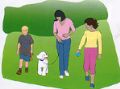
With you and the children around even more, your dog will soon become accustomed to having his 'pack members' around. What he won't understand is that this is short term and he will soon have to become more independent again - this is the time when problems start to develop. When you've returned to work or the children have gone back to school, your dog may start to feel insecure about being left on his own. He may become bored or have devised a tactic such as barking, as he thinks this is what gets you to return even if it is four hours or so later. Spending quality time with your dog is important in order to strengthen the relationship but if this is done infrequently then it will only complicate matters.
Never leave your dog unattended with children, especially in the summertime. Dogs may become more agitated due to the sweltering heat.Keep him under control when out and about, and on a lead in public places.Ensure your dog has access to fresh water at all times and that there are shaded areas available.Don't leave dogs unattended in the garden when it's hot, and remember more dogs stolen from gardens during the summer. Remember to 'scoop that poop'. Smelly poop on a hot day is not good!NEVER leave your dog in a stationary car during the summer.
Lesson Five - Indoor Cats
 The Behaviour hotline at Battersea Dogs Home receives many calls from cat owners experiencing problems with their moggies getting up to mischief - in most cases it's simply because they are bored. In Lesson Five, Nancy Clarke, one of Battersea's Hotline behaviourists, explains how and why to keep your cat both mentally and physically stimulated indoors.
- Why would my cat not be happy?
Cats are highly intelligent specialised carnivores. As natural predators, the cat's ability to see, hear and smell is highly developed and it retains a strong instinct to hunt and explore its environment. However, many of these senses and instincts are made redundant in the domestic home because the cat does not have to hunt for its food ? it appears in its bowl day after day! The cat therefore has to find other ways to amuse himself.
Some problems that can arise when your cat cannot satisfy her natural instincts include boredom, frustration, hyperactivity, aggression to people or other cats and fearfulness. Cats that are restricted indoors are more likely to develop behaviour problems than cats that have access to outdoors. Many indoor cats that sleep during the day cannot be expected to sleep throughout the night as well. Remember that a cat is a nocturnal animal and if we do not provide an alternative playtime then the cat will make up its own routine. Therefore cat stimulation is important for any cat but especially for indoor cats.
- Food for thought / food for the brain
You can make feeding more natural by getting cats to search for their food and by providing it in a form that needs chewing. If you feed dry food, you could put it in small clumps on the floor. You can gradually move the food further away from the bowl each day. The clumps can eventually be scattered throughout the house in different places so that your cat has to search them out.
Chasing and jumping are very natural behaviours for a cat, and give them the exercise that outdoor cats get roaming about. Play with your cat on a regular basis, using small balls, or items such as scrunched up pieces of newspaper, pulled quickly and erratically on the end of a string. You can even buy or tie objects onto small fishing lines and poles so that they can be cast out and moved over a bigger area to encourage stalking and pouncing. Furry, feathery or flapping things are particularly attractive to cats and they also love newspaper tents, cardboard boxes and paper bags - you could consider investing in a 'cat play centre' to provide more stimulation and activity.
- you scratch my back and I'll scratch yours!
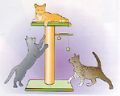
A scratching post is a must, as outdoor cats will naturally sharpen their claws on trees or fences, your indoor cat may take to doing the same thing to your furniture! Tall scratching posts can keep your cat active as she can climb from shelf to shelf, or you could attach old pieces of carpet to a wall, which your cat can scratch. You can encourage the cat to use the scratching posts by dusting them with catnip.
Cats will choose to lie or sit for long periods in safe places where they can watch the world go by, whether it be street activity, people or animals and you need to make sure these areas are available to your cat. Cats love high-up resting areas and you can encourage your cat to be adventurous and use the height of the rooms by providing walkways between high points. They can also use these walkways to jump and climb between resting-places.
These plants can be successfully grown indoors in pots from seeds or small plants that are available in most shops. Many cats find catnip (Nepeta) irresistible and will sniff it and roll along side it. Outdoor cats eat grass to help with digestion and fur balls, so you should grow it indoors for your indoor cat. Providing your cat with these plants indoors will also help prevent them chewing on your houseplants. However, keep everything in moderation as some cats can get too excited by these herbs, especially catnip!
Printer Version