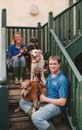
Behind the Scenes
There's no such thing as a 'typical' day in the life of Battersea Dogs & Cats Home. Every day brings something different. Here are some of our staff to tell you what a day working at the Home might involve for them.
- Head Veterinary Nurse
- IT Manager
- Canine Assistant
- Volunteer Cat Socialiser
- Groomer
- Kennel Manager
- Customer Liaison Administrator
- Veterinary Surgeon
- Kennel Hand
- Manager, Brands Hatch
- Driver
- Lost Dogs Line
- Kennel Receptionist
- Rehomer
- Head Behaviourist
- Rehabilitation
- Cat Kennel Hand
- Legacy Officer
Head Veterinary Nurse
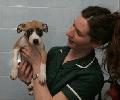 Lesley Faulkner joined Battersea four years ago. In charge of 20 veterinary nurses, Lesley explains what her job entails...
Practically on my first day I managed to lock myself in a kennel, which was rather embarrassing! I also constantly got lost due to the size of the place. However, I loved my job straight away and I still do.
My job provides me with such variety - I get to work with different internal departments, our satellites at Old Windsor and Brands Hatch and with external organisations.
I grew up on a farm and was exposed to many different animals from a young age. My childhood pets included rabbits, guinea pigs, ducklings...even a sheep! Our farm was in the middle of nowhere so job opportunities were limited. I worked for a year at a local dental practice but I really wanted to be a veterinary nurse - a dream that became a reality when I started work at the RSPCA animal hospital in Putney 12 years ago. There I trained and qualified as a staff nurse, working with exotic animals and strays.
The best part of my job is seeing animals recover from their injuries or illnesses and find a loving home. I recently said goodbye to a dog that had given birth to 10 puppies - all is well and she is now in a fantastic new home. Then there's Bertie, a very fat black cat that had a history of blockages of his urethra, who is recovering well and is about to meet his new owners. I also feel such job satisfaction when I see the students get through their training and become qualified. They qualify to do the job they love, just as I did.
The nurses are very caring and dedicated to their work. They do a fantastic job, particularly when carrying out hand rears of kittens and puppies. This involves feeding a kitten or puppy every two to three hours (through the night as well), until they are about five or six weeks old. There are often bleary eyes in the morning but no one complains - it is their passion.
I've seen such progress in the Home since I started here. New procedures have been put in place to help improve the dogs and cats stay well while they wait for a new home, including the kennel cough trial, which has now become procedure as it helped control the disease so well. Recently, generous donations have helped us buy vital equipment such as an ultra-sound and blood machines, which help us get results much faster and ultimately save lives.
Battersea Dogs & Cats Home is an amazing place to work, especially on the veterinary side, as we have so many animals to care for and the team is so dedicated to them. I am really proud to be part of it.
IT Manager
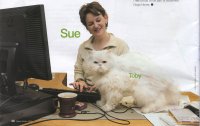 Sue Oak has worked at Battersea Dogs & Home for over 11 years...
You could say I am one of our 'long stay' employees, working in various IT roles over the years.
I always wanted to work in the not-for-profit sector and after gaining five years IT experience, I saw the perfect opportunity at Battersea Dogs & Cats Home and beat over 300 applicants to the job.
When I first started, I was the IT department. It has now grown to three and a quarter members of staff and is responsible for all the technology requirements of the Home's three sites.
When I arrived in 1993, a bespoke animal registration system had been introduced but not implemented. I spent the first few months getting this up and running, starting with updating basic paper systems and procedures. It was pretty tough at first as most staff were hostile to using computers. This formed the beginnings of the sophisticated system in use today, which I have continually developed, with staff help. Aside from registration of all the dogs and cats, there are two different 'matching' systems: one for potential owners and the other for reuniting lost pets with owners. New veterinary and behaviour hotline systems will be released next year.
The system developed for Battersea Dogs & Cats Home has been adopted by a number of other high-profile organisations including Dogs Trust, Wood Green Animal Shelters and Cats Protection. As in many other areas, we were pioneers in computer systems for animal care. It's great that other animal charities are following our lead.
Another big advance was the launch of our very first website in 1995. We were one of the first animal charities to have a website. Looking back it was very basic, with just a few pages. This was updated and re-launched in 1997 and totally revamped in 2002 with the website you see today. Visits to the website have grown from 27,000 a month to a massive 80,000, with people spending an average 13 minutes per visit. Staff wrote all the copy used on the site and provided many of the creative ideas. It was a great project to be involved in. The most popular pages are the 'Our Dogs' and 'Our Cats' pages where we promote cats and dogs looking for new homes.
The best part of my job is seeing a project through and knowing that a newly implemented system or procedure will improve the efficient running of the Home. When my work allows, I spend time socialising whichever foster cat (or occasionally dog) is currently resident in my office. I've had a succession of twenty cats and kittens in my office over the years, most of which have been semi-feral. After patiently building trust over many months, these once terrified felines find a new, secure life in a loving home.
I've seen massive changes during my time here and it's been immensely satisfying to have been instrumental in some of those changes. It's such a unique place to work. I feel proud to be part of Battersea Dogs Home.
Canine Assistant
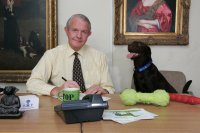 Ginny, the Director General's dog, describes her day...
However early I open my eyes the Chief is always up and around. He only has coffee in the morning but I tuck into a hearty breakfast, as I hate going to work on an empty stomach.
Every morning the Chief and I go for a walk before setting out for work. We arrive in the office before 8.15 am, as he needs some quiet time to prepare one of the many reports he has to write every month.
The rest of the morning is usually taken up with meetings. I like to contribute but the Chief says I'm only good for clearing his office in record time, when I start tearing around his desk. If he's out at lunchtime Ali Taylor, the Home's Head of Behaviour, takes me out for a training session in agility. She says I'm a real quick little learner.
The Chief often goes out to meetings during the day, as he's involved in loads of different things, all working for the welfare of dogs and cats. There's lots of meetings and committees about ex-racing Greyhounds, the use of fireworks, international rescue centres, general animal welfare - you name it, the Chief is involved in it. He's a great believer in working together with other organisations to get the job done.
I don't like to boast but I reckon the Chief fell in love with me at first sight. I was brought into the Home at seven months old and luckily he was on the lookout for a new dog as his two beloved old Spaniels Emma and Sugar had died the previous year. The rest as they say is history.
I was a real wild child at first, as I hadn't had any training. I chewed everything in sight, pee'd everywhere and lunged at every dog I saw but the Chief was very patient and I soon got the hang of what was expected of me. As Aunty Ali says, I catch on real quick.
The Chief and I are usually the last to leave the office, as he likes to clear his desk at the end of the day. We walk home through the park where my Mum Juliette has another delicious meal waiting for me. The food is first class round our place.
The real fun starts on a Friday night when we drive down to our home in Wiltshire. When we get there I tear around the house and garden checking out that everything is just how I left it. Although the Chief doesn't shoot we go off to gun dog classes on a Saturday and I'm an ace at retrieval.
Everyone in the dog world knows of the great work the Chief does on behalf of rescue dogs and cats everywhere and I can testify that his love and compassion for animals doesn't stop at the office door. I hope he knows how fortunate I feel to be the Chief's top dog. After all how lucky can a girl get?
Volunteer Cat Socialiser
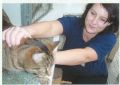 I have worked at Battersea every Sunday afternoon as a volunteer for over three years. I originally applied to walk dogs, but as I work full time, Battersea asked if I would work with the cats instead. I love cats so I was delighted!
The first thing I do when I enter the Old Cat House is check how many guests there are. Often it is full to capacity with cats of every age, colour and temperament ... a true menagerie! Unlike the dog kennels, the cat house is usually quite quiet as all the anxious guests are probably busy contemplating how to escape from the pen or get an extra feed from the cat staff. Occasionally there's a talkative Siamese, voicing her opinions in a running commentary to anyone who will listen.
Each cat is colour coded to tell the socialiser what level of attention is required. We socialise only green and yellow-coded cats but we read the comments of the other socialisers on the cats notes first - forewarned is forearmed! Most cats have likes and dislikes so knowing if there is anything to particularly avoid is useful, especially when approaching a cat for the first time. If you forget, the cat will soon remind you of its own personal likes and dislikes!
We usually spend an average of 15 minutes with each cat. Some welcome our advances more than others and some of the more neglected, bedraggled cases require a lot more time. As cats are quite conscious of their appearance, it's great to see the cat perk up after grooming as she starts to feel more civilised again, with tangle-free fur ready for a good lick wash!
Most of the friendly cats are so pleased to see you when you start to undo their pen - rubbing up against the glass with anticipation. It's funny to see the strange positions the socialisers get themselves into attempting to get inside the pen with the cat to 'bond' ... legs and bums sticking out and not a head in sight!
When I first started as a socialiser I was told, "never take your eyes off the cat you are socialising ... not even for a second". This seemed like obvious advice at the time, but even after my years of experience, I forget once in a while. Usually it is when a particularly friendly cat has lulled me into a false sense of security and I turn my head to speak to someone. Cats know if you are concentrating on them or not and are never ones to take second place in life - they quickly let you know your mistake!
Sometime I manage to go months without a single scratch on my hand. It seems to happen in waves, as one day I will get scratched by nearly every single cat I meet - then nothing for the next few months. Maybe they are just sensing my vulnerability on certain occasions.
The hissing, hiding, angry cats are the hardest to work with, but are often the most rewarding. We use hand made 'stroking sticks' to try and touch the cat whilst keeping our fingers intact. A cat like this will give extremely clear signals that it does not welcome our presence. Yet often this angry soul, once she reluctantly accepts our gentle approaches, will eventually enjoy a good tickle under the chin and will squeeze her eyes shut allowing herself the pleasure for a brief moment.
My friends do not really understand my obsession with my Sunday afternoon Battersea visits ...but they never say anything. My hands usually have a few scratches on them in various stages of healing and my coat has a permanent covering of different-coloured cat hairs accessorising it. I don't really care - I just love the chance to be with the cats once a week.
Groomer
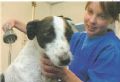 Catherine Etheridge joined Battersea Dogs & Cats Home nearly a decade ago as a kennel hand. She first took up 'the brush and comb' after six years at the Home and hasn't looked back since....
"I'd work here for nothing, you know", I brightly told Colonel Green, after he awarded me my very first pay rise. "You don't want to repeat that too often", the Director General quipped back, bemused by my unrealistic enthusiasm.
I arrive at 6.20am with my two rudely awakened dogs Paddy and Mac and after giving them breakfast, start my rounds of the Home. My first job is to make a list of the day's candidates for a wash and brush up.
I love those early morning starts and often get to turn the lights on in kennels -guaranteed to trigger off that first solitary bark of the day. The sight of sleepy eyes opening, limbs stretching and then the excited wagging of tails never fails to give me a nice warm feeling.
My first customer of the day is usually one of last night's new arrivals. Often the dog's head is weighed down by matted ears. He eyes so veiled by more knotted hair, that he can't make out who or what is approaching him. His tangled fur soaks up the urine he has just passed in fear at my arrival.
He bears his teeth to ward off the unknown. I speak to him softly and he continues to growl. I leave the kennel but now he's curious and lifts up his heavy head. I return, open the door of his pen as he makes a bolt for it but blindly heads straight into the loop of my lead.
Once in the grooming room he sits close and although he still doesn't look at me, at least he lets me touch him. I get to work. His matted fur comes away like peeling off a disgusting old coat that never suited him. The fleas and dirt and smell are left behind. Once the transformation is complete, it's easy to see that all his earlier aggression was completely out of character. He trots back to his kennel, holding his tail up high like a flag. He's a new dog but I already look as though I've been dragged through a hedge backwards.
Mid morning I take Paddy and Mac for a quick toilet break, before resuming work until noon when I check on arrivals off the morning vans and add any new emergencies to my list.
My half hour lunch break is also spent with Paddy and Mac in Battersea Park. Once back at the Home I carry on working through my list. If need be I'll walk any nervous or housetrained dogs round the grounds before starting to groom them.
Of course it is not always easy. Sometimes a dog will start off enjoying the experience before changing their mind halfway through the session, usually when my brush is poised critically close to those sensitive areas. And inevitably it's when I'm taking an indignant and ridiculous-looking half groomed dog back to his kennel that I'm introduced to a visiting VIP as "The Dogs Home Groomer" who "has a real way with dogs!"
I probably finish my last customer of the day at around 3.15 pm or if it is quiet I spend some quality time with the dogs in kennels before cleaning up my grooming room.
All my own dogs are ex-Battersea residents. Paddy is a greyhound/Jack Russell cross. My greyhound Gem is 13 years old and slightly senile but still has so much fun. As for my tri-colour mongrel Mac, I can only say, I've always wanted a dog that nibbles your ears!
At four o'clock I make my way home with my two well-seasoned rail commuters. We're all given a wide berth by my fellow travellers and I can only assume it has something to do with our very own 'eau de canine perfume.'
Kennel Manager
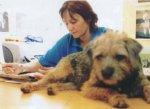 Becky Blackmore has been the Kennel Manager at Battersea Dogs & Cats Home for three years.
"I've always loved dogs and cats and wanted to work with them, so I joined Battersea from the Retired Greyhound Trust, and the time has flown by. My job is to manage the day-to-day running of the Home's kennels in respect of animal welfare and kennel cleanliness and management of all the kennel staff through the supervisors.
If you have a few extra paws of your own at home, you'll know just how much work it can be to look after them properly, so you can only begin to imagine what it's like for us to look after so many 'house-guests' - we can have up to 500 dogs and 150 cats at any one time.
The first job of the morning is to spread the kennel staff out into the different areas of the Home for the morning clean out. This is a very busy time with up to 500 dogs and 150 cats who need feeding and cleaning. For the kennel staff this is like a two-hour workout! The next job is to check what animals arrived overnight and you never know what to expect. One of my main responsibilities is to make sure that we always have enough room for each day's new arrivals. This can be very difficult, as we never refuse a dog. No matter how many we have in, we will always collect strays from all over London, 365 days a year.
I like to go and see the dogs that arrive in our vans during the morning, each with their own story. Some of them will be in good condition and I expect an anxious owner will soon come to collect them. Sadly, others are in a terrible state having been neglected or straying for a long time. You know immediately that no one will be looking for these dogs and in truth they are better off here. We can give them all the medical attention and care they need. In most cases we can turn these dogs around and in time, find them loving new homes.
My own Battersea dogs are good examples - Louie, a two year old black greyhound was sent to Battersea because he wouldn't race and Freda, a Border terrier who arrived here as a neglected youngster. She had no fur and was incredibly sick. It took six months of love and veterinary treatment before we could be sure she would survive. You should see the pair of them now - Louie likes nothing better than to race around the park and Freda likes to spend her day acting as a paperweight and sunbathing on my desk!
With a team of 45 staff to manage there is the inevitable paperwork and administration to be squeezed in. Thank goodness for my Deputy and Supervisors who are able to take a lot of the strain. That way we can all be guaranteed some quality time helping the staff to do the best job they can and spend time with the animals. Part of being the Kennel Manager is recruiting people who want to be kennel hands and I am very concerned only to employ people who will be totally committed to the animals, as this isn't just a job and they need to be aware of that. We are constantly looking to change and improve the environment for the dogs here and often it is the kennel hands that drive this change forward.
The last job for the day is to do my final rounds and check that the dogs and cats are safely tucked up and settled for the night. It has been another successful day at the 'office'. The work the kennel hands do above and beyond the call of duty is absolutely amazing and saves the lives of a great many animals. I am so proud to be a part of it and couldn't imagine ever wanting to do anything else."
Customer Liaison Administrator
 Carol joined Battersea Dogs & Cats Home in 1982. Growing up with animals, she didn't have to think twice when the vacancy came up at Battersea.
"I was a telephonist and switchboard operator for eight years, then worked on reception for another 12 years, a job that brought me much enjoyment. The number of animals arriving here in those days was well over 20,000 a year and without modern computer technology to help us, keeping the records updated involved a lot of manual work. Thankfully, the numbers have dropped considerably as people are becoming more educated and sensible about owning pets.
Ten years ago I was involved in the development of a database that allows us to log the history, details and movements of each animal. Since then we have been able to offer a more efficient and effective service. We may have up to 600 dogs and 150 cats at any one time between Battersea Dogs Home and the other two sites at Brands Hatch and Old Windsor and their movements take a lot of co-ordinating.
Last year I was offered a position in the Customer Liaison office as one of the administrators and, having spent 12 years in my previous role, I thought it was time for a change. Part of the rehoming process sometimes requires home visits to prospective owners in order to assess their suitability. One aspect of my job is co-ordinating the referral procedure; ensuring the advisors make their home visits, liaising with them on any issues raised and the progress of the animals.
Sometimes, people hand in their pet then, due to a change in circumstances, they want it back. We carefully assess the situation and if it's in the best interests of the animal, we will return it. In these situations I have to make sure that the animal is put on hold and the cards on their kennels are marked up so that they're not rehomed to another person.
Often previous owners ask us about what has happened to their animal and it is a joy to write to them and tell them that their pet has been successfully rehomed - much to their relief and peace of mind. The only down side of the job is when I have to write to owners to inform them their pet has been put to sleep. A lot of people still think that we destroy dogs after seven days, but in fact we look after animals for as long as it takes to find them a new home. We only have to make the sad decision to put an animal to sleep because of ill health or behaviour problems.
In my job, no two days are the same as is the case with any job where you are dealing with the public. At times it gets quite hectic, but keeping a cool head gets me through it, and I rather like the buzz. Our department acts as a link between the Home, the staff (all 250 of them) and members of the public. Making sure that information is gathered, captured and circulated speedily and accurately is vital and I'm glad to be a part of this work.
Veterinary Surgeon
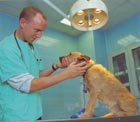 Shaun Opperman is the Head Veterinary Surgeon at Battersea Dogs & Cats Home. Each day is as different for Shaun as the animals that he and the team of vets care for.
"In the ten years I've been at Battersea, I have never been bored. In fact, I cannot imagine a job where the time passes more quickly. The job has constantly evolved in the time that I have worked here, and continues to provide interest. Above all, I'm happy here!
This place is busy, and that suits me very well. Each and every week we take in between 250 and 300 dogs and cats. Many are in robust health and need little preparation for their new home, for a new start in life. Others are no longer in their prime and may need assistance: perhaps surgery to remove a growth, or some dental care or just a medical to see if there are any underlying problems. All receive general health care such as vaccination, worming and flea treatment, and many will be neutered.
On an average day, when I first arrive in the morning I check the patients in the intensive care unit and any animals that have been brought in to us overnight that are poorly. I spend the rest of the morning operating and this is one of my favourite times, as the operating theatre is an oasis of calm in such a busy environment. I do rounds in the afternoon, which involves checking over resident dogs and cats, especially those that have come in to us that day. In between there's admin to do, meetings, liaising with other departments, taking calls or checking staff animals. Cups of tea will punctuate this day. Lots of them.
The clinic staff are a close-knit group within the Home, and teamwork is vital. I work with three other vets and we are all in constant communication about the cases we see. Up until three years ago, I was the sole veterinary surgeon. But it makes such a difference to have this support especially as we also provide veterinary support for the satellite kennels at Old Windsor or Brands Hatch. Equally important are our 20 veterinary nurses. Their dedicated and attentive care makes all the difference to the patients we look after.
The single biggest difference about working as a vet in a rescue centre, as opposed to working in a veterinary practice, is not knowing the animal's history. In a veterinary practice, the animal in front of you has an owner who can provide you with a history. So, for example, in the case of a lame dog, they might tell you how the dog became lame, how long it has been lame and whether it has been getting better or worse. With a stray dog, you do not have these pointers and so you have to rely much more on diagnostic skills or investigative procedures such as radiography, to help piece together the puzzle. This is a challenge that I enjoy."
Kennel Hand
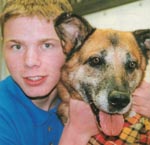 Gareth White is a Kennel Hand who has worked at Battersea since 1999. During a typical day, anything can happen!
"I started working full-time at the Home after Battersea took me on as one of their summer staff and I loved it so much I decided to stay. As I am one of the youngest members of the kennel staff, I'm learning very fast. I find it good because everybody else gives lots of advice to help me out but it also means I often end up with the worst jobs (such as cleaning up all the dog dirt)!
I enjoy moving around between the sections because it gives me a broad range of experience. The most difficult thing about my job, though, is trying not to become too attached to any of the dogs I work with. I particularly like bigger dogs and, if I see a dog in the kennels that I know I will be drawn to, I make a conscious effort to spend more time with other dogs!
My favourite time of the day is first thing in the morning. When we get to the kennels at 8am and turn on the lights the dogs go mad, jumping and barking because they're so glad to see us. Of course, it's not one of the most peaceful ways to start the day, especially if you have had a late one the night before!
Our first task of the day is to start moving the dogs into the yard so we can clean the kennels out and then feed them. Of course, it's important that each dog gets a run outside when it can so throughout the day we continually swap the dogs between their kennels and the yard.
There are four kennel areas that I work in and I am moved around to each one as needed. 'Unders' (because it's under the arches) is usually for the bigger dogs and dogs which are on hold or being treated by the clinic. Tealby is the 'waiting' section where the dogs go when they first come in for their initial seven days. Dogs in Treatments are under medical care and Sales is for those dogs looking for new owners.
Friends say I'm lucky working at Battersea and I do love being with the dogs. It makes my work fun and rewarding."
Manager, Brands Hatch
Richard King is the Manager at Battersea at Brands Hatch. He oversees the day-to-day running of Battersea's satellite kennels in the beautiful Kent countryside.
"I was appointed Manager here at Brands Hatch in June 2002 after two years at the Old Windsor kennels as the Head of Rehabilitation. I was born in Liverpool, however spent most of my working life in the country so I don't miss the hustle and bustle of city life. My first job as a trainee animal rescue worker began 18 years of widespread experience within animal welfare that included managing an animal sanctuary, working with disabled children & horses, breeding and showing dogs in Italy and Portugal and working at Woburn Safari Park helping to manage their 'Wolf Park'.
Such diversity has prepared me well for my latest challenge, although this, a more mental than physical one is no less demanding. The best thing about working at Brands Hatch is the space and tranquillity. With the acres of land at our disposal, the dogs have plenty of room to exercise, which allows both the staff and dogs to spend some quality time together away from the noise of the kennels.
We have the capacity to care for up to 65 dogs and 30 cats, and with a total of 18 staff, an army of volunteers and a full diary of work experience students you can imagine I am kept rather busy. Other responsibilities include overseeing maintenance, health and safety concerns, stock control, managing meetings and dealing with emotive issues from both staff and visitors to the Home.
With responsibility comes masses of paperwork that could so easily render me office-bound so it is important to possess both good organisational and delegation skills. This then allows me the time to involve myself with all departments here to offer support and training to ensure the smooth running of the site.
We are very isolated here (not that we would ever complain - we love it!) so we share information across the three sites by email and telephone on a daily basis. We have regular site meetings to keep abreast of developments within the organisation, so another element of my role is to possess good communication skills. This ensures all the staff are kept informed and have the opportunity for further training & devlopment.
We are the smallest centre in respect of animal numbers so I encourage everybody to muck in and help where they can. I am often elbow deep in earth and stinging nettles helping to keep the place looking neat and tidy. It is also a great way to get out of the office and unwind. There are plans to rebuild Battersea at Brands Hatch in the future which has all the staff buzzing with excitement. The buildings we inherited are not great but the standard of care is second to none. Making a difference to these animals certainly is a compulsive driving force and I am as passionate and excited about my work today as I was on my first day as a trainee all those years ago."
Driver
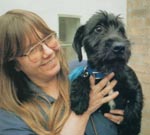 Pauline Martignetti is Battersea's Head Driver, and her job is collecting stray dogs and cats from all over London.
"My day starts at 5am, with feeding my four ex-Battersea dogs. When I arrive at the Home I have a chat with the nightmen to see what's happened overnight and I collect the details of the police stations we need to visit that morning. The stations fax details of the dogs they have in their care to us, and if they're not reunited with their owner at the station, we collect them the next morning and bring them to the Home.
Three vans leave just before 6am and we collect dogs every day of the year -even on Christmas Day. On average each van brings back nine dogs a day. I set off knowing where the dogs are but little else about them, like what type of dog, what condition they are in or how aggressive they might be.
It's difficult to give people advice about handling dogs because so much is down to experience. Luckily I have never really been bitten, although I've had a couple of nips. This is usually no fault of the dog, but is because I've done something stupid. The dog is frightened and stressed, in an alien environment. Then I turn up, and someone says, 'don't go up to that Jack Russell, he bites'. I'm in a bit of a hurry with lots of dogs to collect, and I rush in. And guess what - he bites!
We've usually finished collections around mid-morning, and we stay out until we've got the lot. Years ago there were so many dogs to collect that we had to make three trips a day, and some of the vans didn't get back until 7pm. In those days councils didn't have their own dog wardens, so we were responsible for every single stray dog in London.
As we bring the dogs in to the Home, they are registered, checked over and vaccinated, then taken into Tealby kennels where they start their stay at the Home. We clean out the vans ready for the next day, and one of the drivers stays on until 4pm to cover any jobs that might come up during the day. Sometimes the police contact us with a dog that is poorly or old, and that is worth an extra trip to save the dog from having to spend the night in police kennels.
By 4pm I'm ready to go home to my three other Battersea dogs - I usually take one of them, Billy, out on the vans with me. I've had eight dogs over the 24 or so years I've worked here - it's one of the perils of the job!"
Lost Dogs Line
 Micky Swift works for the Lost Dogs Line, receiving calls from people who have lost or found pets all over the capital.
"I have been at Battersea Dogs & Cats Home since way back in 1977. I started off as a kennel hand and since then have worked in almost every area of the Home. There were only about 15 staff here when I started, and I was one of only two women. How times have changed.
I am presently working as part of the Lost Dogs team. We're on hand from 8am to 8pm to take calls from members of the public who have lost or found dogs or cats. I suppose you could say we're the Home's resident 'pet detectives' - using the computer software, we track down owners and dogs, match reports, and reunite animals with their owners. The department has been very successful so far, and we reunite over 40% of strays. It's great to be part of a new initiative, and I have watched the department grow over the last couple of years.
The most rewarding bit about working in the Lost Dogs department has to be when an owner has been reunited with their dog or cat. As a pet owner myself I know how heartbreaking it is when you lose your dog or cat. When a match has been found and I let the owner know, to hear his or her excitement on the other end of the phone really makes my day.
I remember Ms Barbieraco who called the Lost Dogs Line early one morning. Her two Weimaraners had gone missing the night before. Later that morning a lady called to say her neighbour had woken up to find a pair of Weimaraners asleep in her back garden. Found reports were input onto the computer and immediately matched with Ms Barbieraco's lost reports. The two were put in contact and Ms Barbieraco picked up her dogs later that afternoon. It's possible that these dogs would never have been reunited with their owner without the Lost Dogs Service.
There are some stories, though, that don't have happy endings, like a lady whose cat went missing over a year ago. She still phones me every week just to check if her cat has turned up at Battersea. I feel all choked up, but it makes me even more determined to help those who have lost their pet.
I have seen so many changes take place at Battersea Dogs & Cats Home, and to be honest sometimes it's hardly recognisable anymore, but all the changes just make it better. We have new buildings, specialised areas like the rehabilitation department, animal behaviourists, more nurses and in-house vets. Technology has revolutionised the way in which I can do my job. It's wonderful to think of where we once were and where we are today. I was fairly inexperienced in computers, but now I have learned so much and acquired so many new skills sometimes I even surprise myself!
I definitely wouldn't exchange my experiences here at Battersea Dogs & Cats Home for anything else. It's been 25 years now, I'm very optimistic about the future and there's still a lot for me to do in helping develop the Lost Dogs & Cats Department. I go home every day on a high, which is why I have been here so many years."
Kennel Receptionist
 Mafalda Hay is one of our Kennel Receptionists. She works from 1pm to 9pm, receiving dogs and cats into the Home.
"I work as part of a team known in the Home as the 'one to niners' because of the strange and slightly unsociable hours we work.
I work on the reception of the Tealby kennel block, which is where people come if they've lost or found a dog or cat, or are bringing their own pet into the Home. I'm there to greet people, help them find their dog or cat and also to book in any new arrivals, which means lots of paperwork.
When people lose a dog, they're often referred to us by the Home's Lost Dogs & Cats Line. If we do have a dog matching their pet's description, the owner is told to come and see us at Tealby reception with some identification and photos to prove that the dog is theirs. They fill out a form and I reunite them with their dog.
During the day, we also receive a number of dogs which we call 'gifts' from the public. These need to be dealt with very sensitively. A lot of people are forced to bring their beloved pets into us because of circumstances beyond their control. They're usually very upset at having to part with their animal and all I can do is try and convince them that what they're doing is for the best. I find it really hard not to get emotional at times like this.
Some people bring their dogs into us because they simply don't want them any more, and their attitude can make me cross. But I'm relieved we can find the dogs a home where they'll be loved. It's good that owners hand dogs in instead of just dumping them on the streets, because it's dangerous to abandon an animal like this. When we pick a dog up from the street we have no idea of his history. It's much better to have a dog handed in to us by an owner who can tell us something about him.
When the Home closes there's still lots for me to do. We're always open for people to bring in strays - 24 hours a day - and there needs to be someone here to book them in.
Once the vets have gone home, I put any new arrivals into a pen to be checked in the morning. In between new arrivals I finish my paperwork, and throughout my shift I keep an eye on the security cameras and answer the phone. At about 6.30 pm, I start feeding any of the animals that need an extra meal, and check they're all settled for the night.
At 9pm the night security staff come in to take over and I give them a run-down on the day's events. I also tell them any vital information, such as particular dogs they need to keep an eye on. Then it's off home for a rest and to get ready for another day.
Working in Tealby isn't an easy job, but it's a challenge and I enjoy that. I work at Battersea because I want to help animals, and I'm one of the first faces they meet when they start their journey through the Home to begin their new life. I rather like that."
Rehomer
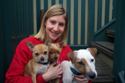 Alisa Johnson is a Rehomer at Battersea.
"As a Rehomer I have a really varied job, and the best of both worlds - I get to deal with people and dogs. I interview prospective new owners every day, and use the computer matchmaking system to find them the most suitable dog for their situation and family. One of the most satisfying aspects of the job is making that match, and introducing someone to their ideal dog or cat, knowing that they're going to be really happy together. On the whole everyone who comes into Battersea looking for a new dog is really nice, but sometimes I have the difficult task of telling someone they can't have a Battersea dog or cat, because they may not have the right home environment at that time.
During the course of the day I could be involved in any number of things. I could be working in Tealby kennels where members of the public arrive if they are bringing in their dog. I could be helping people who have come to claim their lost dog, or recommending people for a home visit. There's quite a lot of administration involved with the job, too - putting dog assessment details on the computer system, writing out cards for the dog's kennels with information for the public when they come to look at the dogs, and completing vaccination cards and microchip paperwork when someone rehomes a dog.
Each of the rehomers has a 'speciality' and takes on rehoming a particular breed or type of dog which we see a lot of - for instance, there's someone who concentrates on Greyhounds or German Shepherds and on the long-stay dogs, or old dogs. My speciality is puppies, and if someone is looking for a puppy I'll often work with them all the way through the rehoming process, giving them specific advice on the puppy's breed or advising them how to settle their new puppy into their home. Often, there are not many puppies for rehoming, so I concentrate on rehoming dogs in Kent kennels, with the rest of the rehoming team.
I also work in the area where prospective new owners have looked at the dogs and found one they like. I discuss with them whether the dog is suitable for their circumstances, and get the dog out of the kennel to meet them. Working here often results in friendships being forged with people, so when they come to collect the dog I'm the one they'll ask to see and they often keep in touch to let me know how the dog's getting on.
The worst part of the job is having to assist and hold a dog while one of the vets puts him to sleep. I know that it's a last resort to alleviate the animal's suffering, but I hate having to do it - all the rehomers do. Despite this aspect of it, I find my job very satisfying, and go home every night knowing that I've done something good that day, in finding unwanted dogs loving new homes."
Head Behaviourist
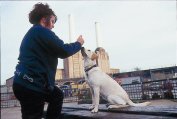 Ali Taylor is the Head Behaviourist at Battersea Dogs & Cats Home.
"I come across some pretty bizarre behavioural traits. There are the dogs that demand their owners go to bed at a particular time every day, or that bark all the way through Coronation Street, or cats that think they are dogs - or even tigers! Then there are the cases where it's the owner that has the behaviour problem, and the dog that really needs the advice - I have to tread carefully in these cases!
I am in charge of the assessment programme at Battersea. Every dog that comes into Battersea will have an assessment to see how easy he is to handle, what sort of motivations and temperament he has, and what kind of home he would be best suited to. The assessment is especially important when a dog comes in as a stray when we have no history to fall back on, so his behaviour has to be thoroughly explored.
If a dog doesn't pass the assessment, with the majority of cases, our rehab team steps in. Difficult dogs are always referred to them in the hope that they can help overcome these challenges. Sadly, there are some dogs with severe aggression problems that would be dangerous to rehome, so they have to be put to sleep.
Most of the dogs that pass through Battersea have minor behavioural problems that are mainly due to a lack of the correct training and guidance. Placed in the right environment and with a bit of direction, they make very good pets. Some behavioural challenges come to light once the dog has settled into its new home and another important part of our work is helping owners find solutions to these problems.
I also deal with the many organisations outside Battersea Dogs & Cats Home that either take our dogs or help us to rehome them. We work closely with a number of breed rescues which either take breed dogs from us or refer a potential home directly to us, which usually turn out to be perfect homes for the breed dogs as they have the relevant experience. Among the other organisations I deal with are the armed forces and the police, who will often take dogs that may not be ideally suited to a home environment.
I have worked at Battersea for almost 11 years. I started as a kennel hand, but I've always had a keen interest in dog behaviour. Before then, I had had several different jobs, from working in a pub, to being a dressmaker and a printer. I also went travelling around the world for a year and in some countries I witnessed some horrific things to do with animals. I'm glad that now, the most important aspect of my job is the welfare of the animals and bettering their lives.
I have learnt a great deal over the years but as with any job; there are always ways of achieving better results. I make it part of my job to constantly learn more about animal behaviour and discover new ways of helping the dogs that come to Battersea, especially those who have suffered some kind of trauma in their lives.
Over the years I have owned Collies, Labradors, Chihuahuas and small cross breeds and mongrels, but I only have two dogs of my own at present. A lot of my knowledge comes from working with my own dogs and their different behavioural traits. They were my tutors as well as 'guinea-pig dogs' to try out various techniques, and they've played a major part in my training and experience.
Most of my time outside work is spent working my dogs and thinking and reading about dogs - although I do manage the odd trip to my local pub - with the dogs, of course! My job always remains busy, there's always a new dog to be assessed or a new challenge, but I like it that way."
Rehabilitation
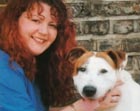 Ann O'Brien is Head of Rehabilitation at Battersea Dogs & Cats Home. Every day is different in the busy Rehabilitation unit.
"Our morning starts with cleaning all the kennels in the Rehab Unit so we are ready to start training the dogs by about 9.30am. A dog is normally referred to Rehab if he is showing signs of behaviour problems. When a dog comes up here, we give him an initial personality assessment so we get a basic idea of what the dog is like. Then one person is assigned to that dog for a week so they can start to build a firm bond. Over the next three weeks or so, both dog and rehabilitator work together on the problem.
The behaviour problems presented to us are widely varied. Food possessiveness, where a dog becomes uptight and nasty when someone approaches during eating, or nervousness, especially during its stay in kennels, are common. So are problems with dog-to-dog sociability, when a dog misbehaves in some way while other dogs are around. These are just a few.
My job is about teamwork. Our team of five works very closely together, helping each other out at every step. It is important for us to build a dog's confidence so we all pitch in with ideas to do that as quickly as possible.
Every Thursday, we hold a meeting to discuss each Rehab dog and his progress. This is when we bounce ideas off each other, trying various methods to determine which ones will work best with a particular dog. Every dog is an individual so we need to spend time adapting a programme for that dog, and training often continues even after the dog leaves Rehab.
Many dogs are shell-shocked and nervous when they first enter the Home. The new environment and the number of other dogs suddenly surrounding them makes it difficult for them to relax. However, after a few days in Rehab, they generally improve under our guidance and gradually build their confidence with people.
You do have your favourites - like Griff, a big, hairy beast of a dog who first came to me because of his difficulty in kennels. He hated the confinement and, whenever I approached him, he would have this wary look on his face, as if thinking, 'Now what's this one up to?' It took three months to build a solid relationship with him and gain his trust but it was worth every minute. He now lives out in the country, where he thoroughly enjoys the wide open spaces.
The best thing about working in Rehab is seeing the dogs rehomed. We meet some wonderful owners and it is a real pleasure to know our dogs are going to good homes. A dog comes to us feeling unsure of himself and his environment but he leaves us ready to start a new life."
Cat Kennel Hand
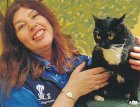 June Haynes, who is now one of our most experienced cat kennel hands, has worked for Battersea Dogs & Cats Home for 26 years. This is her story.
"I've worked at Battersea Dogs & Cats Home for a long time now, and before that, I worked for private kennels, a children's zoo, and in a pet department store. I worked alot with pedigree cats before but when I came to Battersea Dogs & Cats Home, I saw the other side to working with animals. It's very different working with homeless dogs and cats, especially as some have been neglected or mistreated.
I spent my first twenty years at Battersea working with dogs. I have a Jack Russell Terrier called Tootsie who I fostered when she had severe kennel cough. After she had recovered, I could not bear to part with her, so I took her home. Tootsie doesn't like cats, so I decided to work in the cattery and now I have the best of both worlds.
I could spend hours watching cats and their behaviour amazes me. The best place to watch them is in the socialising rooms, which have lots of toys, scratching posts and climbing areas. Some cats go in there because they don't like being handled or because they are unsociable with people or other animals. The volunteer cat socialisers do a wonderful job with these difficult cats, most of which are successfully rehomed.
Not all the cats that arrive at Battersea are friendly and cleaning out their pens can sometimes be quite stressful. I've had a few scratches in my time, and some days I put on my gloves and prepare for battle! Keeping the cattery clean and observing the cats for any signs of ill health is very important. Cats with symptoms of cat flu are moved to the isolation cattery, where they are treated until they're well enough to return to the rehoming block. Every week day some of the cats go to the vet clinic to be neutered or have dentals, and on their return the cat staff keep a close eye on them to ensure a speedy recovery until they're ready to be rehomed.
Sometimes we take in cats that have horribly matted fur, or wounds and sores, and one of the best parts of the job is watching them improve and respond to treatment and care. When a cat is brought into Battersea, we know that it's in the best hands possible and we will do everything we can to give it the best quality of life. There are of course some cats that have to be put to sleep, usually for health reasons. This is a very emotional part of the job, but that everyone working at Battersea needs to accept and understand.
We normally have an average of 40 cats but in early summer this figure can rise to about 90. Most of the cats I care for are strays, and go on to be rehomed, but some belong to people who have been taken into care or have passed away. We work closely with social services and take them in on a short-term basis, as we're not a boarding kennel.
Some time ago, a 12-week-old kitten called Lucky was brought in; her owner had been taken into hospital. She was a beautiful kitten who loved to play and lots of people visited the cattery to play with her. Her owner recovered and Lucky was returned to her, but unfortunately a few weeks later, was hospitalised again so Lucky was brought back to the Home. We were overjoyed to see her again, but felt sad that she had to endure another upset. Eventually her owner decided to give her up, and we found her a lovely new home with a caring family.
At Battersea Dogs and Cats Home, we are constantly working to improve the facilities and the care we provide, and there have been many changes over the years. I've seen many cats pass through, that have found good homes and touch wood have never returned to Battersea, and my job is still as rewarding as it has always been."
Legacy Officer
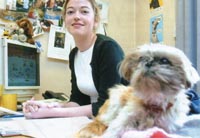 When Louise Farrell saw the job advertisement for a Legacy Officer at Battersea Dogs & Cats Home, it instantly caught her attention. She saw it as a chance to put her legal qualifications to use and work in what she imagined to be a very interesting, compassionate and unique environment.
"I had an interview with two humans, three dogs and a cat, and was recruited and have been working at the Home for four-and-a-half years. My work involves dealing with executors and solicitors when a person has been kind enough to remember Battersea Dogs & Cats Home in their will. We have a number of ongoing cases and it is my job to monitor their progress and to ensure we receive the legacies that have been left to us. Where a person has shared a legacy between different charities, then I have to liaise with the legacy officers from the other named charities.
My job also involves corresponding with and meeting members of the public who are interested in the work we do at Battersea and who may want to include a legacy to the Home. Occasionally I will show people around the kennels and the cattery, explaining what happens to the dogs and cats when they arrive and how they are rehomed. Our visitors are often overwhelmed at the size of the Home and how it all works, most people want to take at least one animal home! A lot of people are also surprised to know that we are funded solely by the support of the public. Following a visit to the Home, people understand and appreciate the scale of the work we do at Battersea Dogs & Cats Home, and the reason why we rely on their generosity.
I have a Battersea dog of my own, Cherry, who I rehomed at the beginning of this year. Cherry's a Shih Tzu crossed with a Chihuahua and is often mistaken for a puppy even though she's eight years old and has a few medical problems. Cherry may be one of the smallest out of the nine dogs on our floor of the office block, but she's not exactly the quietest!
One of the best parts of my job is being surrounded by the animals all day, and compared to working in a corporate legal office somewhere in the city, I prefer this environment any day. It can be very sad and emotional when speaking with people who have suffered a loss, whether it be their pet or a loved one and fortunately Cherry is always on hand to cheer me up. By working on site, it is very satisfying to see how the money we receive is put to use. Legacy income is a major source of funding for the Home and it enables us to continue our work and to improve conditions for the animals in our care. We are always amazed at the generosity of people who remember the Home in their will. We receive different types of gifts, some of the more unusual include paintings, cars, jewellery, property, stamps and a large collection of dolls, all of which are sold to raise funds for the Home. Occasionally I am notified of a dog or cat that has come to the Home after their owner has died and it is important for us to check whether there are any instructions for the animal's care in the deceased's will that we should follow.
Battersea Dogs & Cats Home is a pulsating and vibrant place to work and we have many exciting new developments planned for the future. Expansion, however, means we need resources and it is heartwarming to know that each new legacy left to the Home will help us continue our work and plan for the future. I'm delighted that working at Battersea is everything I anticipated it to be, and so much more!"
 Send to a friend