The Rehabilitation Department
One of the most important aspects of the work of Battersea Dogs Home is done by the dedicated Rehabilitation team.
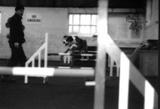 Since the department was set up in 1996, rehabilitation has become one of the most important parts of Battersea Dogs Home's work. And is now cited as one of the aims of the Home. The rehab unit aims to help dogs with behaviour problems to solve their problems and get happily rehomed.
Rehab consists of a team of experienced people who get assigned a few dogs each to work on. It is important that a bond is built between handler and dog so that the dog can build up confidence with the handler. There is a weekly meeting to review how each individual dog is doing, as different methods of socialising and training need to be adapted for each dog.
The department works from 'The Barn', a large building on the new land at Battersea Dogs Home.
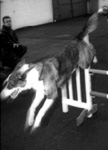
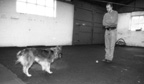 This facility gives them the room to work with agility equipment. It also has 16 kennels to house the dogs in their care. The department was extended in 2003 and now also work from Battersea at Old Windsor where rehab dogs enjoy quieter surroundings and country air.
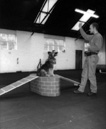 Every dog which comes into Battersea Dogs Home is assessed by a trained member of staff. And it is from these assessments that dogs are referred to rehab, for a wide variety of potential problems. The most common problems tend to be dogs who are nervous or reactive towards people, or status-related issues such as problems with other dogs of the same sex or breed. But problems can be wide ranging, and include possessiveness, handling problems, over-stimulated play and attention-seeking, socialising (shy and nervous dogs), general training needs and kennel-related behaviour.
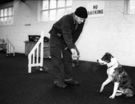 The team then assesses the dog again to establish the extent of the problem, the dog's trainability and requirements of a new home. The team also has to decide the feasibility of working with each individual dog in the unique Battersea Dogs Home environment. The length of stay with rehab varies from dog to dog - some only need a few days but others can spend a few months with the team. The average stay is four to six weeks.
 When all is well with the dog, he goes into a sales block where work will continue by kennel staff. Once he goes to a new home we continually follow up on the dog and provide any training and help needed. We also receive feedback from the new owners which helps us learn.
 But the rehab team faces some great challenges, not the least of which is the London environment. It makes it difficult to work with some behaviour problems, especially dog-to-dog aggression and problems with reactiveness to strangers, both fear and status-related. Unfortunately, both these stimuli are unavoidable at Battersea Dogs Home as the dogs are surrounded by other dogs and by strangers. The limited controlled areas in which to introduce and train alternatives in dogs with these problems mean that sometimes the behaviour problem cannot be solved.
Find out what a day in the life of Rehab is like.
 Send to a friend